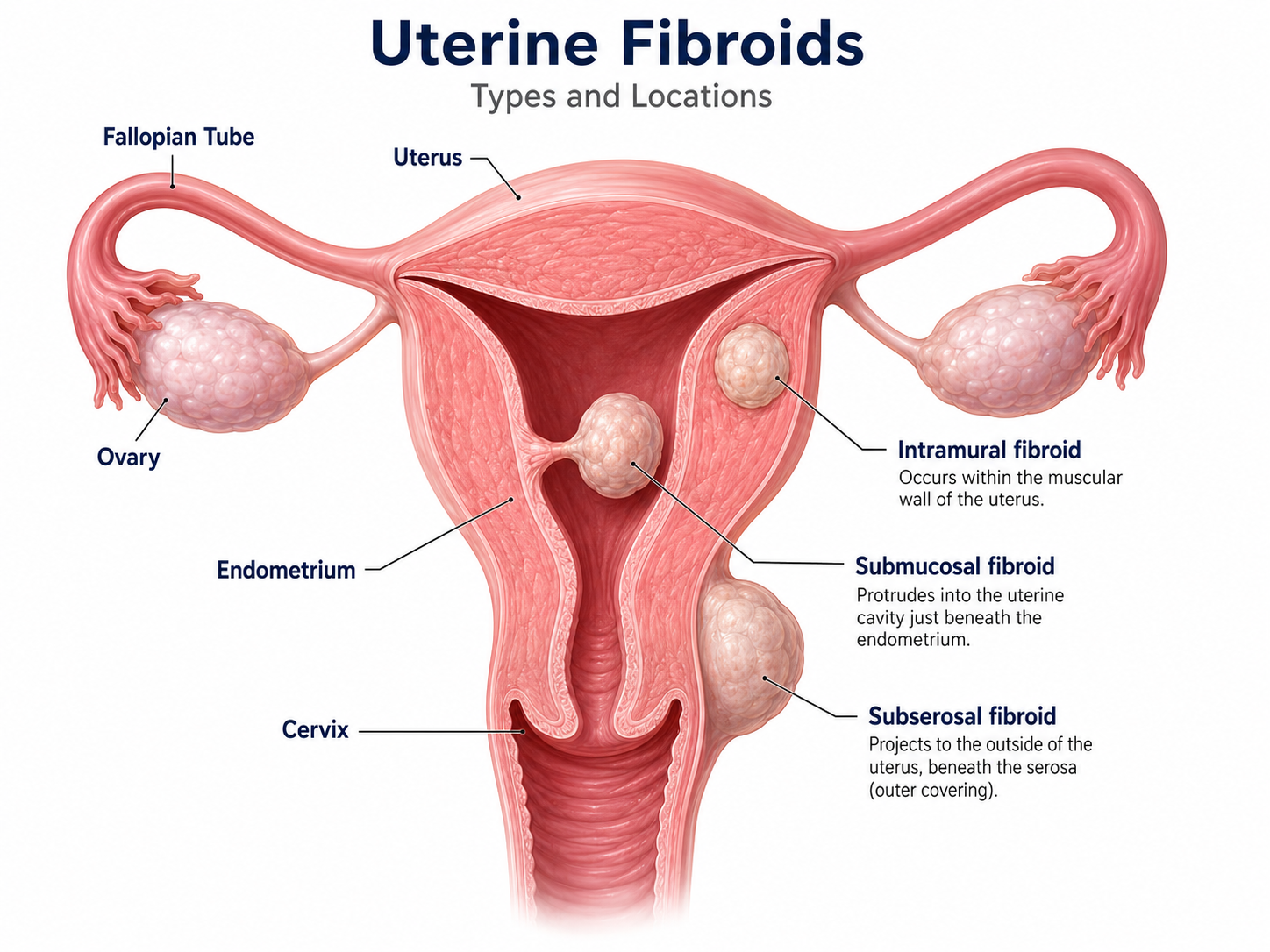
Uterine Fibroids
Uterine fibroids are non-cancerous growths that develop within or around the uterus. Also known as leiomyomas or myomas, fibroids are one of the most common gynecological conditions affecting women during their reproductive years. They can vary in size, number, and location, and while some women experience no symptoms, others may develop significant discomfort that affects their quality of life.
Understanding Fibroids
Fibroids are made up of muscle and fibrous tissue and can develop in different areas of the uterus. Depending on their size and location, they may cause symptoms such as heavy menstrual bleeding, pelvic pain, pressure symptoms, fertility concerns, or pregnancy-related complications.
Common Symptoms of Fibroids
Heavy or prolonged menstrual bleeding
Pelvic pain or pressure
Frequent urination
Constipation or bowel pressure
Abdominal bloating or enlargement
Pain during intercourse
Difficulty conceiving
Pregnancy-related complications
Lower back pain
Causes and Risk Factors
The exact cause of fibroids remains unclear; however, several factors may contribute to their development.
Hormonal Influence
Estrogen and progesterone play a significant role in the growth of fibroids during the reproductive years.
Genetic Factors
A family history of fibroids may increase the likelihood of developing the condition.
Age and Reproductive Factors
Fibroids are most commonly diagnosed in women between the ages of 30 and 50 years.
Lifestyle Factors
Obesity, dietary habits, and other lifestyle factors may contribute to fibroid growth.
Diagnosis
Accurate diagnosis helps determine the size, location, and impact of fibroids and guides treatment decisions.
Medical History
Your doctor will discuss your symptoms, menstrual history, fertility goals, and overall health.
Pelvic Examination
A physical examination may identify an enlarged or irregularly shaped uterus.
Ultrasound Scan
Pelvic and transvaginal ultrasound scans are commonly used to confirm the presence of fibroids.
MRI Scan
MRI may be recommended in selected cases to evaluate complex fibroids and plan treatment.
Fibroid Treatment Options
Treatment is individualized based on symptoms, fibroid size, fertility plans, age, and overall health.
Conservative Management
Many fibroids do not require surgery. Small fibroids with minimal symptoms may simply be monitored through regular follow-up examinations and imaging studies.
Medical Management
Medications may be prescribed to control heavy bleeding, reduce pain, regulate menstrual cycles, and help manage symptoms effectively.
Lifestyle Modifications
Healthy lifestyle habits, including maintaining a healthy weight and balanced diet, may support overall gynecological health.
Minimally Invasive Procedures
Depending on the patient’s condition, minimally invasive procedures may be considered to manage symptoms while preserving the uterus whenever possible.
When is Surgery Recommended?
Surgery may be considered when fibroids cause significant symptoms, continue to grow, affect fertility, or fail to respond to conservative treatment methods.
Severe or persistent heavy menstrual bleeding
Significant pelvic pain or pressure
Large fibroids causing pressure symptoms
Infertility associated with fibroids
Recurrent pregnancy complications
Rapidly growing fibroids requiring further evaluation
Minimally Invasive Surgical Options
Laparoscopic Myomectomy
A minimally invasive procedure performed through small abdominal incisions to remove fibroids while preserving the uterus.
Hysteroscopic Fibroid Removal
Fibroids located inside the uterine cavity may be removed using a hysteroscope inserted through the cervix without external incisions.
Advanced Minimally Invasive Techniques
Modern gynecological surgery focuses on minimizing pain, reducing recovery time, limiting scarring, and helping patients return to daily activities sooner.
Hysterectomy
In selected cases where symptoms are severe and childbearing is complete, hysterectomy may be considered as a definitive treatment option.
Our Treatment Philosophy
At Dr. Dean Martin’s practice, we believe that not every fibroid requires surgery. Treatment decisions are based on individual symptoms, reproductive goals, and overall health. Conservative management and medical therapy are often considered before surgical intervention whenever appropriate.
Benefits of Personalized Fibroid Care
Individualized treatment plans
Focus on symptom relief and quality of life
Fertility-preserving options when appropriate
Advanced minimally invasive surgical techniques
Comprehensive long-term monitoring and support
Prognosis
Most women with fibroids can successfully manage their symptoms and maintain an excellent quality of life. Early diagnosis, regular monitoring, and personalized treatment plans help achieve the best possible outcomes.
Doctor Note
At Dr. Dean Martin’s practice, we provide compassionate, evidence-based care for women with uterine fibroids. Our goal is to offer the most appropriate treatment options while prioritizing patient comfort, reproductive health, and long-term well-being.
You don't have to manage your symptoms alone.
Compassionate care, advanced treatment, and personalized support for every stage of your health journey.