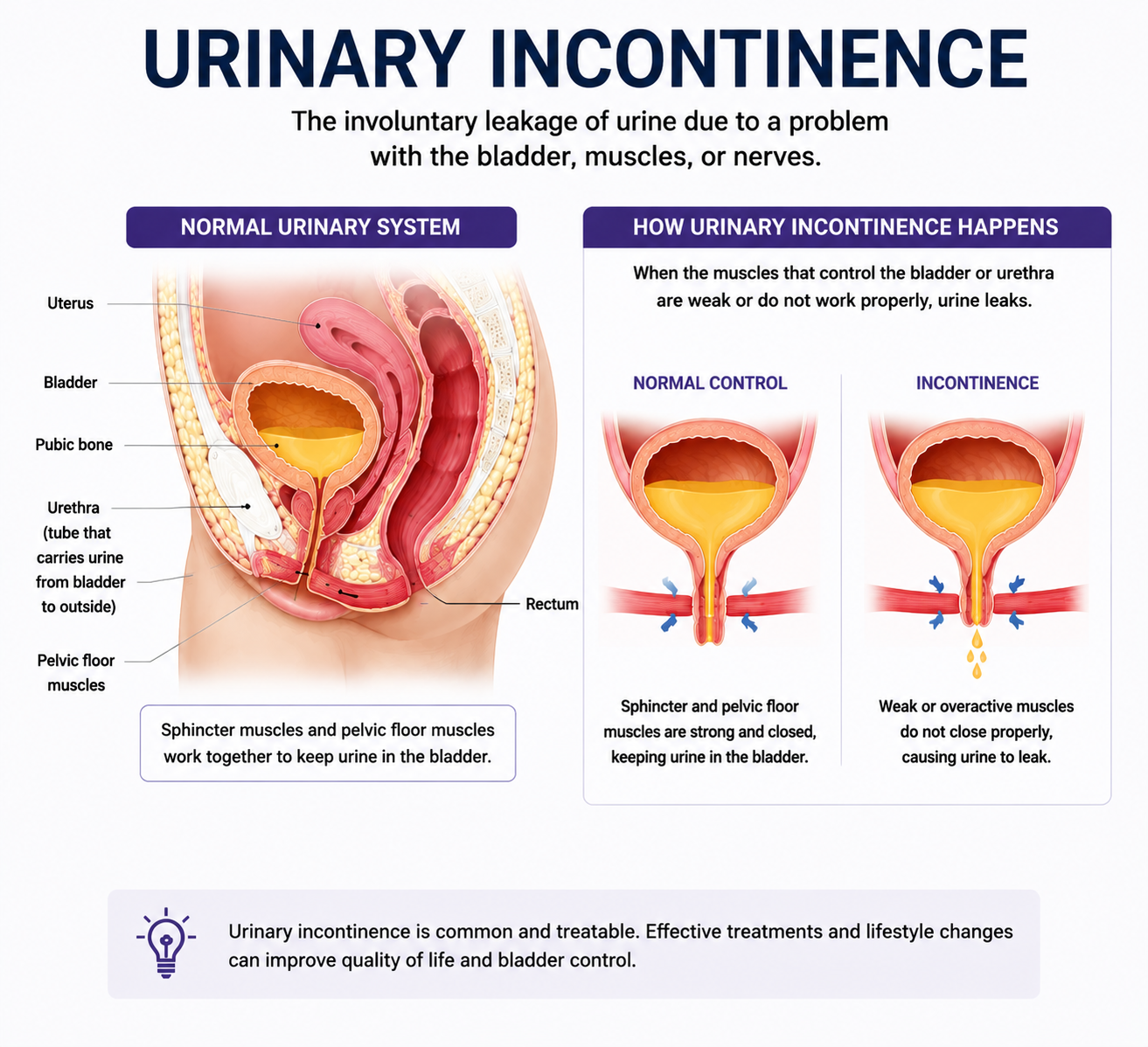
Urinary Incontinence
Urinary incontinence is a medical condition characterized by the involuntary loss of urine, leading to a reduced ability to control bladder function. It can range from mild leakage to complete loss of bladder control and is more commonly seen in women, especially during pregnancy, after childbirth, and after menopause.
Prevalence
Urinary incontinence is a common condition affecting millions of people worldwide. The risk increases with age and is more frequently seen in women due to pregnancy, childbirth, hormonal changes, and pelvic floor weakening.
Causes of Urinary Incontinence
Urinary incontinence can occur due to multiple underlying factors affecting bladder control and pelvic support.
Weak Pelvic Floor Muscles
Weak or damaged pelvic muscles can lead to loss of bladder support, causing urine leakage during coughing, sneezing, or physical activity.
Overactive Bladder
Abnormal bladder muscle contractions can create sudden urges to urinate, often leading to leakage before reaching the toilet.
Nerve-Related Disorders
Conditions such as diabetes, stroke, multiple sclerosis, or spinal injuries may disrupt bladder control signals.
Hormonal Changes
Reduced estrogen levels during menopause can weaken the urinary tract and pelvic tissues, contributing to incontinence.
Medical Conditions & Medications
Urinary tract infections, chronic constipation, and certain medications such as diuretics can increase urine output or affect bladder control.
Types of Urinary Incontinence
Stress Incontinence
Leakage of urine occurs during physical activities such as coughing, sneezing, laughing, or lifting heavy objects.
Urge Incontinence
A sudden and intense urge to urinate followed by involuntary urine leakage.
Overflow Incontinence
Continuous or frequent dribbling of urine due to incomplete bladder emptying.
Functional Incontinence
Occurs when physical or cognitive limitations prevent a person from reaching the toilet in time.
Diagnosis
Diagnosis of urinary incontinence involves evaluating symptoms and identifying the underlying cause through various assessments.
Medical History
The doctor evaluates symptoms, lifestyle factors, medical conditions, and bladder habits.
Physical Examination
A pelvic examination may be performed in women to assess pelvic floor strength and organ support.
Urine Tests
Urinalysis helps detect infections, blood, or other abnormalities.
Bladder Diary
Recording fluid intake and urination patterns helps understand bladder behavior.
Advanced Testing
In some cases, ultrasound or urodynamic studies may be used to evaluate bladder function.
Treatment Options
Treatment depends on the type and severity of urinary incontinence and aims to improve bladder control and quality of life.
Lifestyle Modifications
Dietary changes, weight management, fluid control, and pelvic floor exercises (Kegel exercises) can significantly improve symptoms.
Medications
Medicines may be prescribed to relax the bladder or reduce urgency and frequency.
Behavioral Therapy
Bladder training and scheduled voiding techniques help improve bladder control over time.
Devices
In some cases, devices such as pessaries or catheters may be used for support and symptom management.
Surgical Treatment
Surgical options, including sling procedures (tapes), may be recommended when conservative treatments are not effective.
Prognosis
The prognosis for urinary incontinence is generally good with proper diagnosis and treatment. Many patients experience significant improvement through lifestyle changes, physiotherapy, medications, or surgical intervention when required. Early evaluation helps achieve better long-term outcomes and improved quality of life.
At Dr. Dean Martin’s clinic, we provide comprehensive evaluation and personalized treatment plans for urinary incontinence to help patients regain confidence, comfort, and control in their daily life.
You don't have to manage your symptoms alone.
Compassionate care, advanced treatment, and personalized support for every stage of your health journey.